Green water, a pump that won't prime, a level that keeps dropping — tell us what yours is doing and we'll connect you with a Phoenix pool repair company. Free, no obligation.
Prefer to talk? (602) 833-7014 — phone or form, whichever suits you.
We are a Phoenix pool repair referral service. Tell us what's wrong and we'll connect you with a local pool repair company. We don't carry out repairs and we don't send anyone out ourselves — we pass your details to a pool repair company working in your part of the Phoenix metro, and they quote you directly. There is no charge to you, no markup on the work, and you are free to say no. If you would rather see who covers your suburb first, start at our service area pages.
The reason this exists is boring and practical. Pool repair in the Phoenix metro is a fragmented trade — hundreds of one- and two-truck operations, most of them found by asking a neighbor, and the ones with the best websites are not reliably the ones with the best technicians. A homeowner with a dead pump on a Saturday morning does not want to run a procurement exercise. They want one competent company to look at it.
So the useful thing we can do is the sorting. You describe the fault once; it goes to a company that does that specific kind of work in your part of the Valley. Leak detection, heater electronics and plaster resurfacing are three genuinely different skill sets, and the commonest wasted callout in this trade is the right company arriving at the wrong job.
Start here
Most people arrive knowing the symptom and not the part. That is fine — the symptom is enough to get you to the right trade, and the wrong guess costs a wasted visit.
It runs, but the basket never fills and no water moves. Usually a lid o-ring that has gone hard, a cracked suction line, or a failing shaft seal. Left running dry, a pump can cook its own motor in an afternoon — that is the repair that turns cheap into expensive. Start here: pool pump and motor repair.
Green in Phoenix is usually days, not weeks, in the making — chlorine burns off fast in summer sun and one broken pump or a clogged filter is enough. The fix is rarely more chemicals; it is finding what stopped circulating. That diagnosis is the front end of most pool repair work in Phoenix.
Some of it is evaporation — this is the desert. The question is how much. A pool that drops noticeably faster than a bucket of water sitting beside it has a leak, and it is usually in the plumbing, the skimmer throat or the light niche rather than the shell. That is a job for leak detection before anyone breaks concrete.
Phoenix heaters do most of their work between November and March, then sit idle for months — which is why so many of them fail on the first cold morning. Ignition faults, pressure switches and corroded heat exchangers are the usual three. A quote for pool heater repair should say which one it is before it says a price.
Feet that come out scratched, a chalky gray bloom, dark staining that will not brush off — that is the plaster (the pool's inner surface) reaching the end of its life rather than a cleaning problem. It is the one item on this list that is a planned spend, not an emergency, and the cost section below has real numbers for it.
A dead light is sometimes a bulb and sometimes a failed niche seal letting water into the fixture, which is a very different job with a very different price. It is also the one repair on this page with a real electrical risk attached, so it is worth saying plainly: this is not a good weekend project.
Money
We have no prices to quote you, because we don't do the work — so instead of inventing a number, here is what Phoenix companies actually publish. Treat it as the shape of the market, not a quote.
The range the #1-ranking Phoenix pool company publishes in its own pump-repair page markup.
From the same company’s heater-repair page markup. The spread is that wide because a pressure switch and a heat exchanger are not the same job.
Published by a long-established Phoenix pool company: standard plaster starts around $6,500, pebble finishes run $8,000 to $15,000.
The same company’s figure for a full remodel in the Phoenix area — surface, tile, coping and beyond.
The top two are what most calls actually turn out to be — a pump or a heater that has stopped. The bottom two are planned projects rather than repairs: nobody resurfaces a pool because it broke on Saturday.
Those are other companies' published ranges, not ours. To find out what yours costs, tell us what the pool is doing.
Two things are worth knowing before you read any quote. The first is that equipment here does not last as long as the box says. A long-established Phoenix pool company publishes 8 to 12 years for local pumps and blames hard water — it puts the metro at 300 to 350 ppm calcium — together with the heat the equipment pad bakes in all summer. That is its figure and its explanation, not a measurement of ours — we have not tested the water and we are not in a position to confirm it.
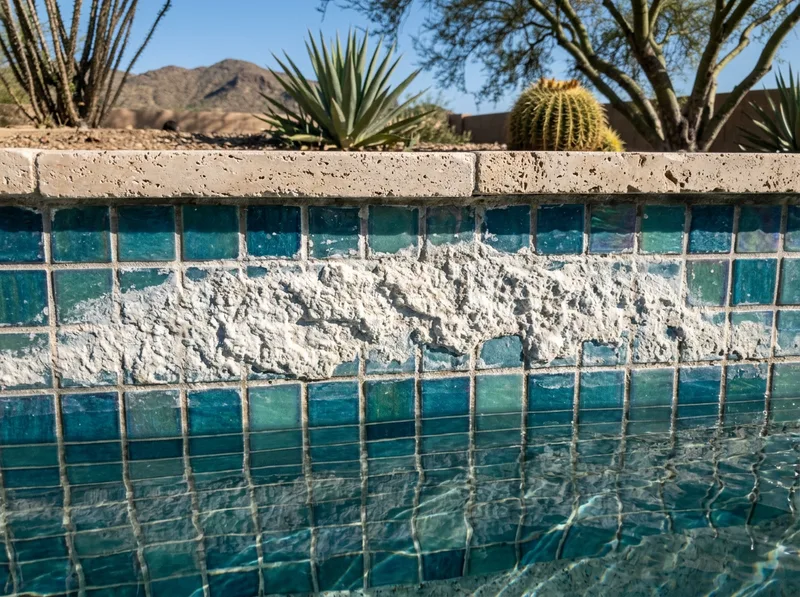
The second is that surface choice is a timing decision more than a price one. The same company publishes 5 to 7 years for standard plaster in Phoenix before it stains and roughens, against 15 to 20 for a pebble finish. The cheap surface at $6,500 and the expensive one at $15,000 are not really competing on price — they are competing on how soon you do this again.
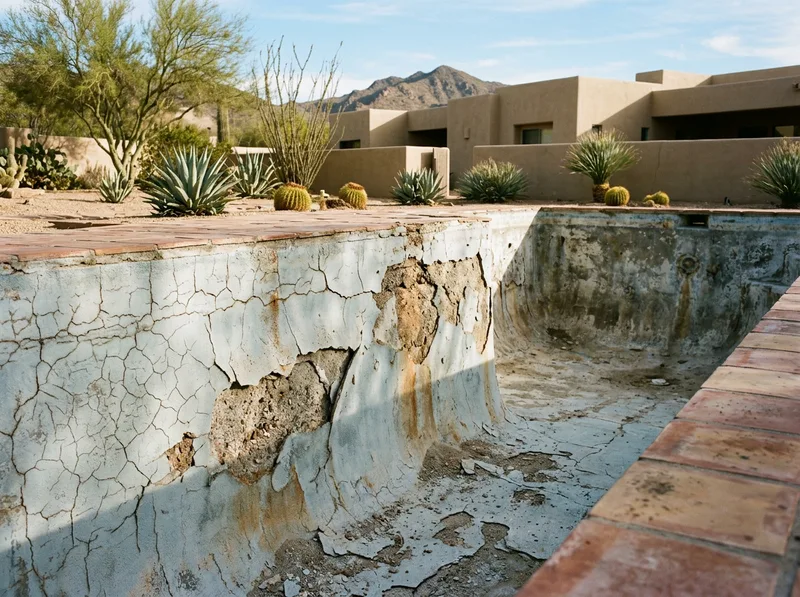
On running costs, ENERGY STAR's own page makes the only claim here that isn't a marketing number: halving a pump's speed drops it to roughly one-eighth of the energy. That is why a variable-speed pump (one that can run slowly for longer instead of flat out for a few hours) is worth asking about as a line item on any pump quote, whatever percentage a brochure puts on it.
You do not need to know pool equipment to judge a quote. Three things separate a good one from a guess. It names the failed part before it names a price — "the shaft seal has gone and it has taken the motor bearings with it" is a diagnosis; "the pump needs doing" is not. It splits parts from labor, so you can see what you are actually buying. And it says what warranty comes with the part, which on pool equipment is usually the manufacturer's rather than the installer's.
Be wary of a price quoted over the phone before anyone has seen the equipment pad. On a pump or a heater the same symptom can have a $200 cause and a $2,000 cause, and a company confident enough to quote sight-unseen has usually priced for the expensive one. Equally, be wary of a diagnosis that jumps straight to replacement on equipment under about eight years old.
The process
Four steps, and two of them are ours. We have put a timeframe only on the parts we control — a promise about somebody else's schedule would not be worth much.
Three fields and a sentence in your own words. You do not need to know what the part is called — "it hums and nothing happens" is a better description than a guessed diagnosis.
About a minute
A person reads it and matches it to a Phoenix pool repair company. Leak detection, a dead heater and a resurface quote are three different trades, and sending all three to the same place wastes everybody’s morning.
By hand
The company quotes you, schedules with you and invoices you. We are not in the middle of that conversation and we do not mark anything up.
No markup
Nothing here obliges you to book. If the quote is wrong for you, say no. Using this site costs a homeowner nothing either way.
No obligation
Tell us what the pool is doing
None of this is required, and a message with none of it still gets read. But four details cut a diagnostic visit short, and a shorter visit is a cheaper one. The make and model off the pump or heater label — it is a sticker on the housing, and a photo of it is easier than transcribing it. Roughly how old the pool is. What changed just before the problem started, including anything you tried. And whether the equipment has ever been worked on before, because a previous repair is often the fastest route to the current fault.
Coverage
Six cities, each one a real page rather than a name on a list. If your pool is outside them, the form still reaches someone — the boundary below is about which pages exist, not about who will drive to you.
Outside those six? Send the form anyway and say where you are — plenty of Phoenix companies work wider than their own city page suggests.
Questions
We are a Phoenix pool repair referral service. Tell us what's wrong and we'll connect you with a local pool repair company. We are not the contractor and we do not send anyone out ourselves. It costs a homeowner nothing to use, we do not take a cut of your invoice, and you are free to ignore the quote you get. If you would rather talk it through first, call (602) 833-7014 or use the contact page.
It depends entirely on which part failed, and anyone quoting a flat number before seeing the equipment is guessing. For scale, the highest-ranking Phoenix pool company publishes $200 to $2,800 for pump repair and $350 to $7,000 for heater repair in its own page markup. Those are that company's ranges, not ours — we have no prices, because we do not do the work.
Run the bucket test first: fill a bucket, sit it on a step so the water lines match inside and out, and leave it 24 hours with the pump running as normal. If the pool drops further than the bucket, evaporation is not your answer. Beyond that it is a pressure test of the lines and a dye check at the skimmer, light niche and returns.
Usually not, if you catch it. A hardened lid o-ring, a loose drain plug or a cracked union lets air in and stops the pump pulling a prime. What turns it expensive is running it that way, because a pump with no water through it has nothing cooling the seal. Switch it off and call (602) 833-7014 or send the form.
Phoenix summer is the reason. Unstabilized chlorine breaks down fast in this much direct sun, so a pool that loses circulation for 48 hours has effectively been sitting untreated. Green almost always points at equipment — a pump that has stopped, a filter that is blinded, or a timer that quietly stopped firing.
Shorter than the national figure. A long-established Phoenix company puts local pumps at 8 to 12 years and attributes the gap to hard water — it publishes 300 to 350 ppm calcium for the metro — plus the heat the equipment pad sits in all summer. If yours is past ten and failing repeatedly, replacement is the conversation to have.
Sometimes, and it depends on the day and the job. A pump that has failed with a full pool of green water in July is treated differently from a resurfacing quote. Say "urgent" in the message and it gets read that way — see same-day and emergency pool repair.
The physics is not in dispute even where the marketing percentages are. ENERGY STAR puts it plainly: halving a pump's speed drops it to about one-eighth of the energy. Run longer at a lower speed and you filter better for less. Ask any quote to include the variable-speed option as a line item.
Standard plaster is published locally at 5 to 7 years in Phoenix before it stains and roughens; pebble finishes at 15 to 20. That gap is why the cheaper surface is not always the cheaper decision. It is a planned spend — worth getting two or three quotes rather than the first one.
One message, one Phoenix pool company, a direct quote. If it turns out to be a fifteen-minute fix, that is a good outcome and you should hear it from somebody who has looked at the equipment.
We are a Phoenix pool repair referral service. Tell us what's wrong and we'll connect you with a local pool repair company.
Rather call? (602) 833-7014